4-2-3-1 formation
The 4-2-3-1 uses two holding midfielders to protect the defense, with three attacking midfielders behind one striker. It became the most common formation in top football in the 2000s and 2010s.
How the 4-2-3-1 works
The two holding midfielders, often called the double pivot, screen the back four and start attacks. Usually one stays deeper while the other moves forward. Ahead of them, the number 10 plays between the opposition lines, and the two wide attackers cut inside or stretch the pitch.
Without the ball, the attacking midfielders drop back and the shape turns into a 4-4-1-1 or a 4-5-1. That makes it easy to defend with nine players behind the ball and still have the attacking three ready to break.
Strengths
- Two holding midfielders give strong protection to the back four.
- The number 10 has space to create between the lines.
- Plenty of attacking options: wide players, the 10, and overlapping full-backs.
- Flexible: easy to switch to a 4-4-1-1 or a 4-3-3 during a match.
Weaknesses
- A lone striker can be isolated if the attacking midfielders don't get forward.
- The 10 has to defend too, or the double pivot is outnumbered.
- When the wide players come inside, the full-backs are the only width.
- Can turn slow and cautious if both holding midfielders stay back.
Player roles in the 4-2-3-1
Goalkeeper
Starts attacks with quick distribution to the full-backs or the pivot.
Full-backs
Overlap to add width when the wide attackers come inside.
Centre-backs
Protected by the double pivot, so they can defend the box and pass forward.
Double pivot
Two holding midfielders. A ball-winner next to a deep passer is a common pairing.
Number 10
The playmaker, who creates chances and supports the striker.
Wide attackers
Score and assist as well as cross, often cutting inside onto their stronger foot.
Striker
Holds the ball up, brings the 10 into play, and finishes chances.
Famous teams that used the 4-2-3-1
Inter Milan under José Mourinho (2009 to 2010)
Sneijder as the number 10 behind Milito, and the club won the treble.
Spain at the 2010 World Cup
Vicente del Bosque often paired Busquets and Xabi Alonso as a double pivot, with Xavi and Iniesta ahead of them, and Spain won its first World Cup.
Real Madrid under José Mourinho (2011 to 2012)
Xabi Alonso and Khedira behind Özil and Cristiano Ronaldo, winning La Liga with 100 points.
Bayern Munich under Jupp Heynckes (2012 to 2013)
Schweinsteiger and Javi Martínez behind Robben, Müller and Ribéry, on the way to the treble.
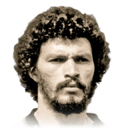
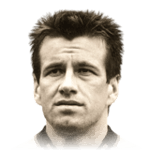

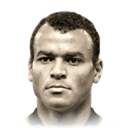
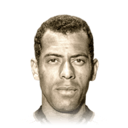
Example lineup: Brazil legends XI
Pelé as the number 10, Garrincha and Ronaldinho out wide, Ronaldo up front, and Cafu and Roberto Carlos flying down the flanks.
- ST Ronaldo
- LM Ronaldinho
- RM Mané Garrincha
- CAM Pelé
- CDM Sócrates
- CDM Dunga
- LB Roberto Carlos
- RB Marcos Cafú
- CB Carlos Alberto Torres
- CB Lúcio
- GK Dida
Then swap in your own players, change the theme, and download it.
4-2-3-1 variations
The lineup builder has 2 versions of the 4-2-3-1. Each one changes the shape of the midfield or attack.
4-2-3-1 (a)
Three narrow attacking midfielders, with the outside two closer to the striker.